Nails · care
The 2–3 week rule: when to refill (and why it saves you money)
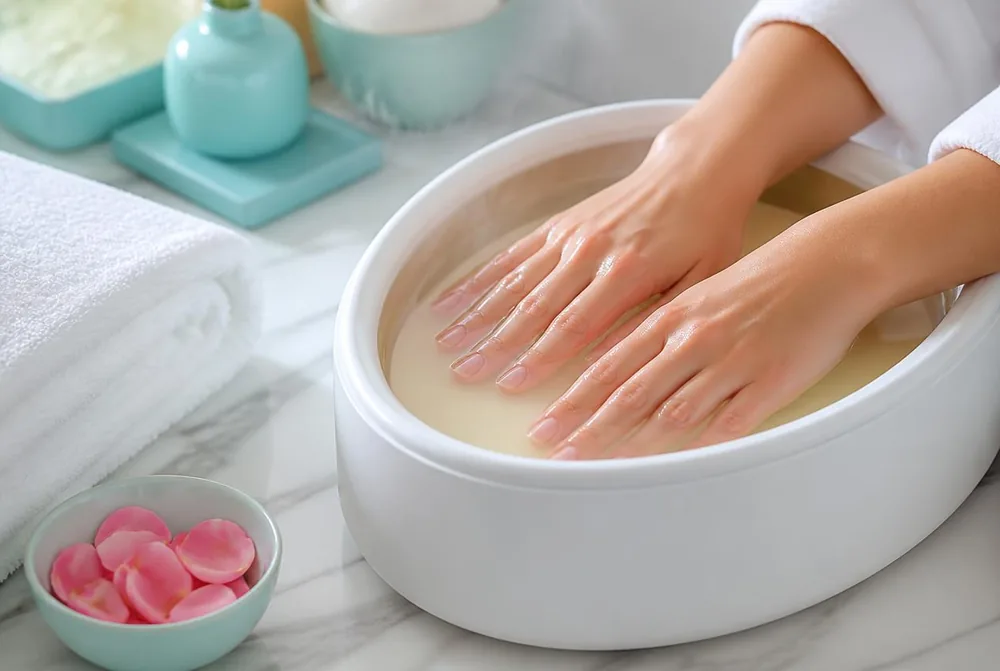
A refill isn’t a new set — it’s May working with what’s already on your hand. She fills the gap of natural nail that’s grown in near the cuticle, reshapes the tip and edges that have grown out of shape, and puts fresh color or gel over the whole thing. Done on schedule, a refill takes under an hour and the set looks the way it did the day you got it. Left too long, it’s a longer, harder appointment — and it costs more.
Why 2–3 weeks, not “whenever it starts bugging you”
Your natural nail keeps growing under an acrylic or polygel set the same way it grows under nothing at all. In the first two weeks that growth is small enough that a refill is quick: fill the gap, reshape, done. Past three weeks, there’s more new nail to work around, the balance of the extension has shifted toward the tip, and the whole nail is more likely to have started lifting at the base — which is where trouble actually starts.
What May Art charges, and why it climbs
Refill pricing at May Art is tied directly to how long it’s been since your last visit, because the work involved actually changes. Two weeks is $60 and about 55 minutes. Three weeks is $70 and closer to 1 hour 30. Four weeks or more is $75, and by then the appointment looks a lot like a partial new set — more filing, more building material, more time reshaping every nail instead of touching up a few. Waiting doesn’t make the set cheaper to maintain; it makes the next visit do the job of two.
| Time since your last visit | Price | Typical time |
|---|---|---|
| 2 weeks | $60 | ~55 min |
| 3 weeks | $70 | ~1 h 30 |
| 4+ weeks | $75 | ~1 h 30 |
How to catch lifting before it’s a problem
Lifting is when the product separates from the natural nail, usually starting at the cuticle or a side wall, and it’s the main reason a set fails early. Catch it early and it’s a normal refill. Catch it late and it’s often a repair or a redo. Watch for: a visible gap or ridge where the extension meets your cuticle, one nail that catches on fabric or hair when the rest don’t, a spot that looks slightly darker or duller than the surrounding nail, or any nail that flexes more than its neighbors when you press it gently. If it’s just one nail, you don’t have to wait for a full refill appointment — a single nail repair is $7.
Between visits
- Cuticle oil most nights keeps the seal between your nail and the product flexible instead of brittle.
- Gloves for dishes and any cleaning with bleach or heavy detergent protect that same seal from the inside out.
- Nails are not tools. Opening cans, scraping labels, prying phone cases — that’s exactly the kind of stress that starts a lift at the edge of a nail that would otherwise have gone the full three weeks.
When a new set beats another refill
A refill assumes the nail underneath is in reasonable shape. If a nail has lifted across most of its surface, if you notice an unusual color or smell under the product, or if it’s been well over a month since your last visit, the better move is a full soak-off and a fresh set — acrylic removal is $17 — so May can actually see the natural nail before building on top of it again. It’s a longer visit once, instead of patching over a problem for months.
The easiest way to stay on the 2–3 week rhythm: book your next refill before you leave the chair. Booksy will text you a reminder, and May can already tell from your set that day roughly when it’ll need attention.
More from the table
Gel, acrylic or polygel: which set is right for your hands?
The honest differences in strength, feel, cost and removal — and how May decides at the table.
Read
A Dominican blowout in Florida humidity: how to make it last all week
What the blower actually does, the night routine that keeps it sleek, and when to add keratin.
Read